
My Dog Got Hurt on a Walk: First Aid Steps
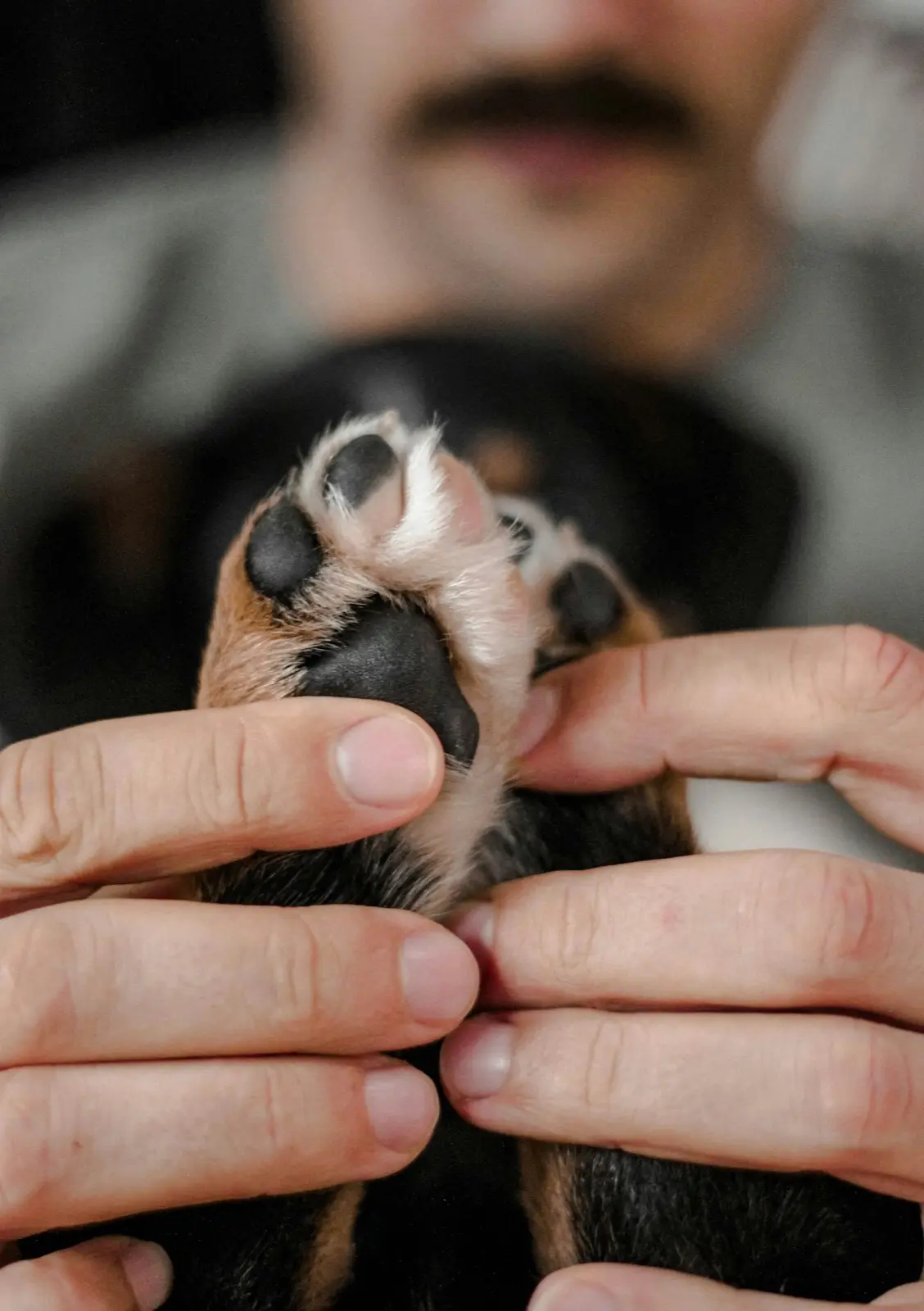
A walk in the woods, on a mountain trail or through the fields sometimes brings bad surprises: a shard of glass, a foxtail lodged between the paw pads, a fall. Knowing how to respond calmly to your dog’s minor injuries keeps a small wound from getting worse and eases their pain until you can reach a clinic. This article covers the most common situations on walks and the first aid steps to take, along with when a veterinarian’s opinion becomes essential.
This article is for information only and does not replace advice from a veterinarian.
What should I do first when my dog gets hurt on a walk?
Above all, stay calm and make the situation safe for both you and your dog. An injured dog is scared and may react unpredictably, even toward their owner: approach slowly and speak in a steady voice. If necessary — and only if you can do it without stressing them — an improvised muzzle can prevent a reflex bite while you treat the wound.
Then proceed step by step:
- Move your dog away from the source of danger and settle them in a safe spot.
- Calmly assess the injury: location, bleeding, presence of a foreign object.
- Give the first aid the situation calls for, using the contents of your kit.
- Decide how urgent it is and contact a veterinarian if needed.
A well-stocked canine first aid kit makes all the difference: gauze pads, antiseptic, a bandage, tweezers and a tick remover let you act effectively in the field.
How do I treat a cut or a paw pad wound?
A cut gets cleaned, disinfected and protected — but a deep or heavily bleeding wound needs a veterinarian. Paw pads, especially exposed on rocky terrain, are prone to cuts that bleed readily and heal slowly because of the constant pressure on them.
For a superficial wound:
- Clean the wound with clear water or saline solution to remove dirt and debris.
- Disinfect with a pet-safe antiseptic.
- Protect with a sterile gauze pad and a bandage that isn’t too tight, so you don’t cut off circulation.
- Keep your dog from licking the area.
If bleeding is heavy, apply firm pressure with a clean gauze pad and head to a veterinarian. A deep, gaping or dirty wound may need stitches and antibiotic cover: don’t put off the visit.
How do I handle a foxtail?
A foxtail — that small, dart-shaped dry grass seed — can burrow into the skin, between the toes, into an ear or an eye, and migrate dangerously. If you spot a visible, superficial foxtail, for example between the paw pads, you can gently try to remove it with tweezers. But never force it, and never probe inside a body cavity.
The telltale signs of a foxtail are:
- Persistent licking or nibbling at one precise spot, often a paw.
- Repeated head shaking or sudden ear scratching.
- Violent, repeated sneezing, or a watery eye that stays shut.
- A lump or a small oozing hole in the skin.
If the foxtail is embedded, invisible, or located in an ear, an eye or the nose, see a veterinarian quickly: left in place, it can migrate and cause an abscess. These problems are common in summer, particularly on high-altitude outings — see our guide to mountain vacations with your dog.
What if my dog is limping after a walk?
A limp calls first for rest and a careful examination of the affected leg. Have your dog sit and gently inspect the limb: paw pads, the spaces between the toes, the nails, then work your way up to the joint. You’re looking for a thorn, a foreign object, a cut, a broken nail or a spot that’s painful to the touch.
Depending on what you find:
- If there’s a superficial, accessible foreign object, remove it gently and disinfect.
- If there’s mild discomfort with no wound or swelling, rest your dog and monitor how it evolves.
- If there’s swelling, sharp pain, a dangling leg or a limp that persists, see a veterinarian.
Never give human pain medication: many anti-inflammatories that are common for people are toxic to dogs. If the limp doesn’t improve quickly or gets worse, a veterinary exam is needed to rule out a sprain, a fracture or a more serious injury.
When is it a veterinary emergency?
Some situations allow no delay and require getting to a veterinarian immediately. In those cases, first aid only serves to stabilize your dog for the ride.
Seek emergency care in case of:
- Heavy bleeding that doesn’t stop despite pressure.
- A deep, gaping wound, or one exposing tissue.
- Intense pain, a leg that can’t bear weight, suspected fracture.
- A foreign object in an eye, an ear, or one that’s hard to remove.
- Breathing difficulties, marked lethargy or shock.
Before setting out on a walk, look up the contact details of a veterinarian and an emergency clinic near where you’re staying. When traveling, this habit will save you precious time the day you need it.
Sources
Frequently asked questions
Can I give my injured dog a human painkiller?
No, never. Many common human medications, including some anti-inflammatories, are toxic or even fatal to dogs. Never give any medication on your own initiative — contact a veterinarian, who will prescribe an appropriate treatment if needed.
How do I know if a wound needs stitches?
A wound that is deep, gaping, long, bleeding heavily or exposing tissue generally needs veterinary care and sometimes stitches. When in doubt, get it checked: a properly closed wound heals faster and carries less risk of infection.
My dog has a foxtail — can I remove it myself?
You can gently try to remove a visible, superficial foxtail — for example between the paw pads — with tweezers. However, never probe an ear, an eye or a nostril, and never force it. An embedded or invisible foxtail must be removed by a veterinarian before it migrates.
What should go in a first aid kit for walks?
The essentials include sterile gauze pads, a pet-safe antiseptic, saline solution, a bandage, tweezers, a tick remover and an emergency blanket. Also carry the contact details of a local veterinarian. Preparing this kit before you leave lets you act quickly in the field.