
Traveling by Car With Your Dog: The Gear That's Actually Useful
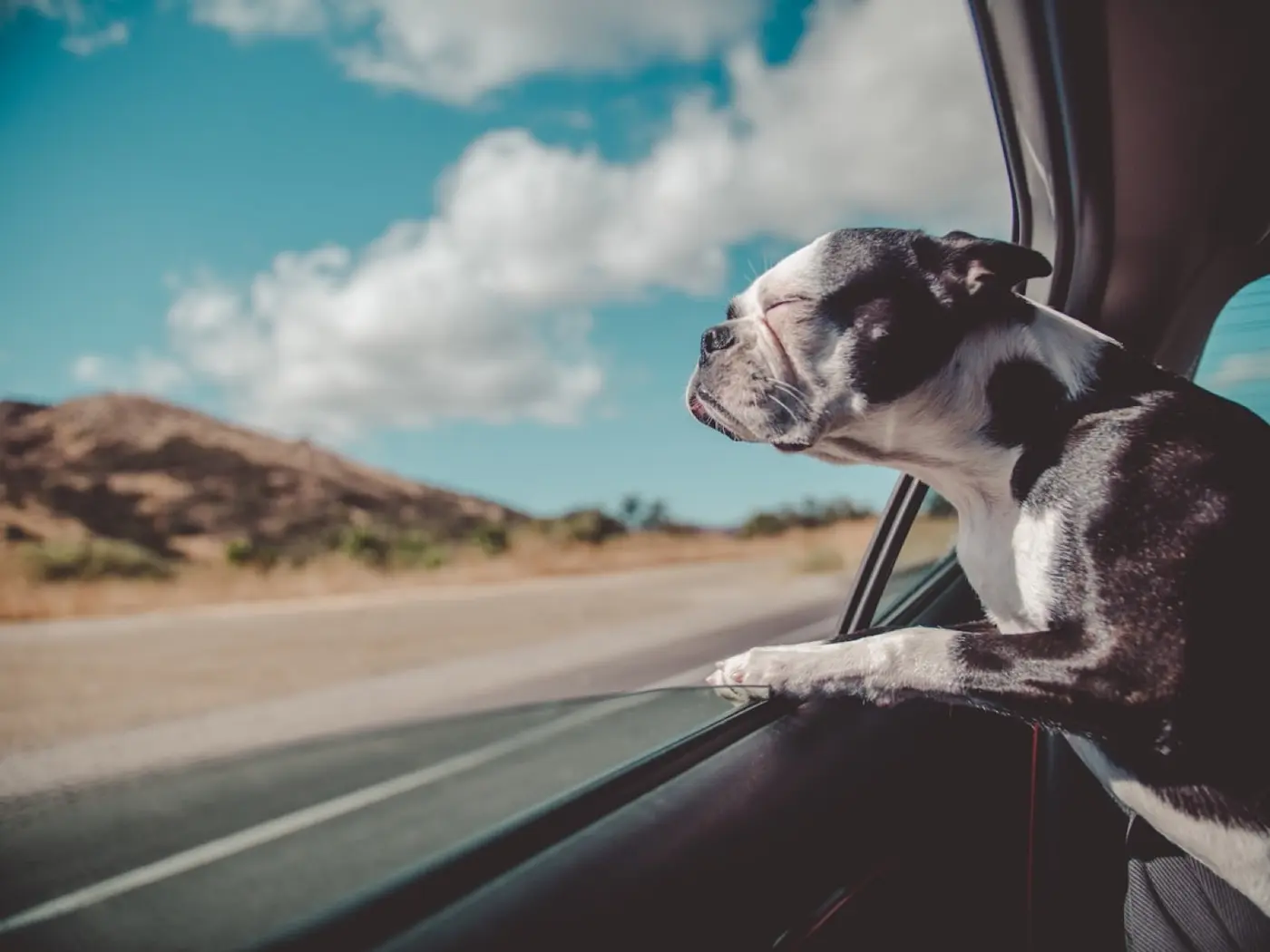
An unrestrained dog in a car is a risk to itself and to the passengers. In sudden braking or a crash, a 20 kg (44 lb) animal becomes a projectile, and a loose dog can also distract the driver or bolt in panic after an accident. Beyond safety, a long drive raises very concrete questions: how to protect the seats, keep the animal hydrated, prevent motion sickness and keep the cabin livable.
This guide runs through the gear that’s genuinely useful — and separates the essentials from the merely pleasant. It’s for the person who goes on vacation once a year as much as for the one who takes their dog everywhere daily. We mention a few representative models as examples, without quoting prices or figures you’ll want to verify yourself.
Why securing your dog in the car is non-negotiable
In many countries, traffic law requires that nothing interfere with the driver’s control of the vehicle: a loose, restless dog can amount to an offense. But the stakes go beyond regulations. In a crash at just 50 km/h (30 mph), an animal’s apparent weight is multiplied several dozen times: a dog thrown forward can be seriously injured, injure a passenger, or compromise rescue efforts by running loose after the accident.
Three families of solutions can restrain a dog:
- Seat belt + harness: practical on the back seat, low-bulk, suited to calm dogs.
- The travel crate: the most protective if it’s sturdy and secured, ideal for the cargo area of a wagon or SUV.
- The barrier or divider net: separates the cargo area from the cabin, but doesn’t contain the animal in a side impact.
The right choice depends on the dog’s size, the type of vehicle and how often you drive. None of these devices replaces training: a dog accustomed gradually travels far more calmly.
How do you choose a certified restraint system?
This is the point on which you shouldn’t compromise. Not all “car” harnesses are equal: many are sold for the car but have never been crash-tested. The criteria that matter:
- Crash testing: look for devices tested under a recognized protocol. Some brands, like Kurgo, publicize their strength testing, which is a useful benchmark.
- A harness, not a collar: never attach a dog by the collar in a car — it risks severe neck injuries. The belt clips to a harness that spreads the force across the chest.
- Proper fit: a well-adjusted harness leaves room for two fingers, no more, no less. Too loose, it doesn’t restrain; too tight, it injures.
- Tether length: short is best, to limit forward projection.
| Criterion | What to favor |
|---|---|
| Attachment type | Certified harness, never the collar |
| Validation | Crash-tested system under a recognized protocol |
| Fit | Snug on the chest, two fingers of slack |
| Tether length | Short, to reduce projection distance |
| Stitching strength | Reinforced, metal buckles preferred |
For a detailed look at models and standards, see our dedicated guide to the dog car safety harness.
Do you need a crate, a harness or a barrier?
Each solution has its use cases. Here’s how to decide by profile:
- Small or medium dog, occasional trips: a seat belt clipped to a certified harness is enough and stays unobtrusive.
- Large dog, wagon or SUV: a rigid, secured travel crate offers the best protection, provided it’s wedged so it can’t slide.
- Anxious or destructive dog: a crate reassures and limits damage, but requires gradual acclimation.
- Several dogs: a divider barrier organizes the cargo area, ideally complemented by individual tethers.
The crate remains the safest device in a crash, provided it’s sturdy and properly anchored. A crate sliding around the trunk protects no one. The barrier, meanwhile, mostly protects the cabin passengers rather than the dog itself.
How do you protect the interior without sacrificing comfort?
Once safety is settled, comes the question of cleanliness. Hair, mud, claws and drool can quickly ruin a back seat. The most useful protections:
- The seat cover: essential as soon as the dog rides on the back seat. Hammock-style models, which also cover the backs of the front seats, keep the dog from sliding into the footwell under braking.
- The cargo liner: for dogs that ride in the back, a waterproof, washable liner protects the carpet.
- Door protectors: useful for dogs that scratch getting in and out.
For comfort, check that the non-slip cover remains compatible with the harness (openings for the seat belt) and that it’s machine-washable. A good cover goes on and comes off in seconds — otherwise, you’ll end up not using it.
Hydration, breaks and motion sickness
On the road, water and breaks matter as much as gear. A dog dehydrates quickly in a hot cabin, and it must never be left alone in a parked car, even for a few minutes: the temperature climbs dangerously.
- Hydration: bring a travel bowl or a spout bottle, and offer water at every break. Our selection of portable bowls and feeding gear details the right solutions.
- Breaks: every 2 to 3 hours, stop to let the dog walk and relieve itself. It’s also a chance to check the harness.
- Motion sickness: common in puppies, it often eases with age and habit. Traveling on an empty stomach (light meal several hours before), good ventilation and splitting up trips all help. If it persists, a veterinarian can suggest an appropriate solution.
Storage and setup: think through the whole trip
A successful trip is a prepared one. Before leaving, gather the essentials in a dedicated bag: water, collapsible bowl, leash, waste bags, towel, health records and something to clean up a possible accident.
- Storage: a trunk organizer or a seat-back pouch keeps gear accessible without crowding the dog’s space.
- Setup: fit the harness and cover while parked, never while driving. Give the dog time to settle before starting off.
- Ventilation and temperature: ensure good airflow and don’t expose the dog to direct sun through the window.
For an overview of organizing a whole trip, from departure to arrival, see our complete guide to traveling by car with your dog.
Which gear for which profile?
To sum up, here are the priorities by situation:
- Occasional trips, small dog: certified harness + seat belt + seat cover. That’s enough.
- Large dog, frequent long drives: secured crate or crash-tested harness, cargo liner, travel bowl, organizer.
- Tight budget: invest first in the certified restraint; seat protection can wait.
- Anxious dog: crate + gradual acclimation, and short trips at first.
The golden rule: safety first, comfort second. Expensive but badly fitted gear protects no better than a simple device correctly installed.
Sources
- Sécurité routière — French road-safety agency, recommendations on transporting animals by car
- Service-Public.fr — French government portal, transporting an animal and traffic law
- ADAC (German automobile club, with TÜV) — crash tests of pet restraint devices
- American Veterinary Medical Association (AVMA) — Traveling with your pet
Frequently asked questions
Is it legally required to restrain a dog in a car?
In many countries, traffic laws require that nothing interfere with the driver's control of the vehicle, which effectively rules out a loose, restless dog. Beyond the legal aspect, a restraint system is above all an essential safety measure for the animal and the passengers in a crash.
Can you attach a dog by its collar in the car?
No, never. In sudden braking or a collision, the pull on the collar can cause severe neck injuries. Always use a certified harness that spreads the force across the chest, connected to the seat belt by a short tether.
Travel crate or harness: which protects better?
A rigid, sturdy, properly secured crate generally offers the best protection in a crash, especially for large dogs. A crash-tested harness remains an excellent back-seat solution for small and medium dogs, and is more practical day-to-day.
How do I manage hydration during a long drive?
Offer water at every break, every 2 to 3 hours, using a collapsible bowl or a spout bottle. Never leave the dog alone in a parked car, and keep the cabin well ventilated to prevent dehydration.
My dog gets carsick — what can I do?
Travel on an empty stomach (a light meal several hours before departure), air out the cabin well and break trips into shorter segments to gradually accustom your dog. If the motion sickness persists, see a veterinarian, who can suggest an appropriate solution.