
The Best Dog Water Fountains in 2026: Comparison Guide
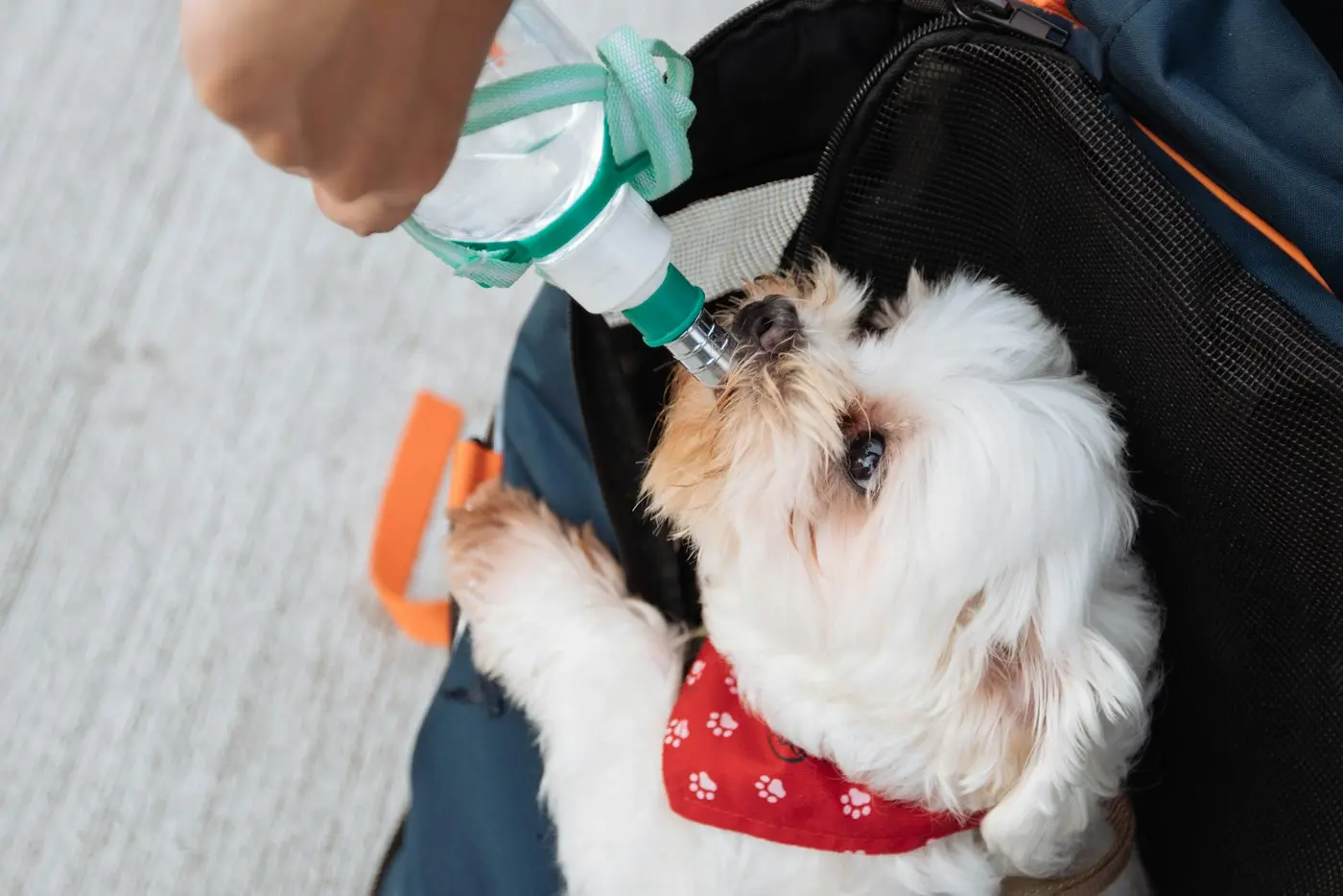
Many dogs drink too little. The water in a regular bowl goes stagnant, warms up, collects dust and hair, and quickly loses its appeal. The result: an animal that dehydrates insidiously, especially in summer or after exercise. A water fountain keeps water moving, cool and oxygenated, which naturally encourages your dog to drink more. It’s also a long-term asset for urinary and kidney health.
This guide is for anyone hesitating in front of the sheer variety of models: owners of a puppy, a large athletic dog, a senior dog that’s hard to keep hydrated, or simply anyone who is out all day and wants clean water waiting at home. We run through the criteria that actually matter — without drowning you in marketing claims — and mention a few representative models to illustrate each use case.
Why a fountain rather than a plain bowl?
Running water instinctively attracts animals: a dog that snubs its bowl will often lap at a faucet or a moving puddle. A fountain reproduces that principle by circulating water continuously. Three concrete benefits follow:
- More regular hydration: movement and oxygenation make the water more appealing, which increases the amount drunk over the day.
- Cleaner water: circulation through a filter traps hair, debris and particles, and limits the stagnation that favors bacteria.
- Autonomy: a large reservoir covers a full day away without intervention, where a bowl empties or gets dirty fast.
This is not a gadget reserved for cats. For a senior dog prone to kidney problems, an athletic dog that burns energy, or a naturally “light drinker,” a fountain is a genuine prevention tool. It obviously doesn’t replace monitoring how much water your dog drinks or seeing a vet if thirst seems abnormal.
How do you choose the reservoir capacity?
Capacity determines autonomy and everyday convenience. A small reservoir forces you to refill daily; a large one can be left longer but takes up space and demands just as rigorous a cleaning routine.
The right benchmark remains your dog’s size and the number of animals in the household:
| Profile | Capacity to favor | Note |
|---|---|---|
| Puppy, small dog (under 10 kg / 22 lb) | Compact reservoir | A fountain like the Catit Pixi, known for its small footprint, works well |
| Medium dog (10–25 kg / 22–55 lb) | Intermediate capacity | A compromise between autonomy and footprint |
| Large dog (over 25 kg / 55 lb) | Large reservoir | A model like the PetSafe Drinkwell, often recommended for big drinkers |
| Multi-pet household | Large reservoir, wide basin | Several animals can drink without crowding each other |
Whatever the volume, never let the reservoir empty completely: a pump running dry wears out prematurely. A large reservoir you check regularly beats a small one you forget.
What criteria matter for filtration and water quality?
Filtration is the heart of the fountain. Most models combine a mechanical foam (which traps hair and debris) and an activated-carbon filter (which improves taste and captures certain impurities). A few points to check:
- Availability of replacement filters: a filter that’s impossible to find or overpriced quickly makes the fountain unusable. Widespread lines like PetSafe Drinkwell or Catit have the advantage of easy-to-find filters.
- Replacement frequency: follow the manufacturer’s recommendation; a saturated filter no longer filters anything and can even release impurities back into the water.
- The option to run the fountain without a filter: useful in a pinch, but avoid it long-term.
No filter replaces regular cleaning: biofilm — that slippery film that forms on the walls — harbors bacteria and must be scrubbed off mechanically, filter or no filter.
Noise level: an underrated criterion
A fountain runs around the clock, often in a living room or bedroom. A humming pump or an irregular trickling can quickly grate — and some timid dogs will avoid it outright. Quiet operation depends mostly on two things:
- The water level: a fountain with a low reservoir makes more noise because the pump “sucks” air. Keeping the level high noticeably reduces the trickling.
- Pump quality: properly insulated, well-designed pumps are more discreet. User feedback is more telling here than advertised figures.
If silence is a priority, look at models with a reputation for quietness and place the fountain on a stable surface that doesn’t act as a sounding board.
Which material should you choose: plastic, stainless steel or ceramic?
The material affects hygiene, durability and price. Here’s how to decide:
| Material | Best if… | Watch out for |
|---|---|---|
| Plastic | Tight budget, need for lightness | Scratches over time, and micro-scratches harbor bacteria; choose BPA-free plastic |
| Stainless steel | You want hygiene and longevity | Heavier, sometimes pricier, but very easy to disinfect |
| Ceramic | Looks and stability come first | Heavy and fragile if knocked, but its non-porous surface is very healthy |
Stainless steel and ceramic have non-porous surfaces that clean thoroughly and limit bacterial growth. Plastic remains a valid choice if it’s food-grade, BPA-free, and replaced as soon as it’s scratched. For a dog prone to chin acne (encouraged by damaged plastic), stainless steel or ceramic is preferable.
Maintenance, flow and setup: what changes day-to-day life
A fountain is only useful if you maintain it. Before buying, look at how it comes apart: the fewer nooks and parts, the faster the weekly cleaning. Models whose pump disassembles completely for rinsing are noticeably more practical over time.
- Maintenance: rinse and change the water every 1 to 3 days, do a full cleaning (pump included) every week, and change the filter as recommended.
- Flow: an adjustable flow rate is a plus. Timid dogs prefer a gentle stream, big drinkers a more generous flow. Multiple flow modes (stream, dome, cascade) let you test what your dog likes.
- Setup: plan for a nearby outlet and a stable spot, away from food bowls to limit splashing. A fountain is still an electrical appliance: keep the cord out of reach of curious jaws.
To go deeper on managing water day-to-day and on the road, see our guide to feeding and hydrating your dog while traveling, and for portable solutions, our selection of portable bowls and feeding gear.
Which model for which dog?
No fountain is “the best” in absolute terms: it all depends on the profile. A few pointers:
- Small dog or compact home: a small, discreet model like the Catit Pixi, known for its small footprint and simple maintenance.
- Large dog or several animals: a large-reservoir model like the PetSafe Drinkwell, often recommended for its autonomy and wide basin.
- Timid dog: favor a gentle, quiet flow, even if it means setting the flow rate to minimum.
- Maximum hygiene requirements (senior dog, sensitive skin): aim for stainless steel or ceramic, easy to disinfect.
The best purchase is the one you’ll actually maintain: a fountain that’s simple to take apart, with filters you can find easily, beats a sophisticated model that ends up unplugged.
Sources
Frequently asked questions
Is a water fountain really useful for a dog?
Yes, especially for dogs that don't drink much on their own, senior animals or those prone to urinary issues. Moving water is more appealing and stays cleaner than stagnant water in a bowl, which encourages more regular hydration.
How often should you clean a dog fountain?
Change the water every 1 to 3 days and do a full cleaning, pump included, at least once a week to remove biofilm. Replace the filter according to the manufacturer's recommendations, usually every two to four weeks.
Are fountains noisy?
Good models are nearly silent as long as the reservoir is full. Most noise comes from a water level that's too low, which makes the pump suck in air. Keep the level high and place the fountain on a stable surface.
Plastic, stainless steel or ceramic: which material is healthiest?
Stainless steel and ceramic are non-porous, so they disinfect better and harbor fewer bacteria. Plastic is acceptable if it's food-grade and BPA-free, but it scratches over time and should then be replaced.
What capacity should I choose for my dog's size?
A small dog does fine with a compact reservoir, while a large dog or a multi-pet household benefits from a large reservoir for longer autonomy. In any case, never let the pump run dry.